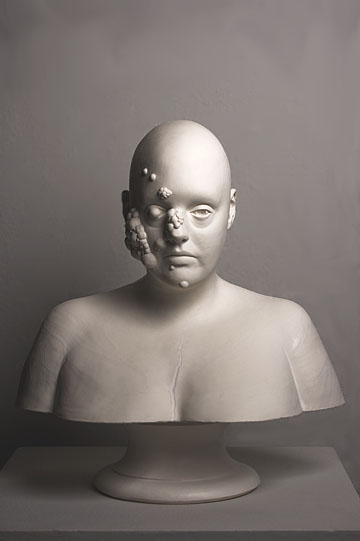
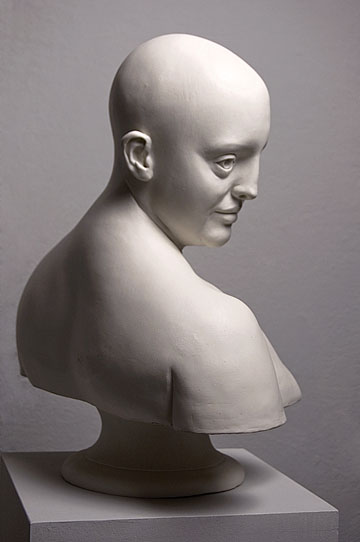
Through this
series of porcelain busts I've explored the link between
clay and skin. During the Enlightenment, the notion of
purity was conveyed by mantaining fair and flawless skin.
It was also made evident in the infamous race among
European nations to find a recipe for porcelain, a
perfectly white and translucent clay body, free from
impurities such as iron. Porcelain quickly became a popular
material with which to convey the human form. It was often
left unglazed as a way of representing skin- smooth, supple
and ideal. Of specific
importance to this group of busts is the commonly
held Enlightenment belief that any birthmark is a direct
result of a mother’s fears or unfulfilled desires during
her pregnancy. This superstition is often referred to
as Muter
Mahler, or mother’s
badness.

© 2009 teri frame Contact Me